
.jpg)
Table of Contents:
Welcome to the Moast newsletter. We spend the week collecting news, trends, and other content that we think would be interesting to e-commerce founders and CMOs. Our goal is to provide value without sounding like a promo for our app. Helpful wether you use Moast or not.
UBS just released its 2026 Global Wealth Report and the headline is a paradox: global personal wealth grew 10.8% last year, the fastest pace since 2017 and nearly a million new millionaires were created. But median wealth, the number that actually reflects how most households are doing, fell in most of the 56 countries tracked. More millionaires at the top, less in the middle. The gap between average and median wealth has never been wider.
Here's what else caught our attention in the world of e-commercethis week 👇
1/ DTC Headlines
Target and Parachute are back for round two with another capsule collection
-> The new limited-run drops July 1 in select stores, priced $12–$169 in French press browns and summer blues.
-> It's Target's second collab with the DTC linen brand — the first one from April 2025 sold out quickly in stores.
-> Part of a broader Target merchandise reset that also includes LoveShackFancy, Poppi, and Hollister tie-ins for back-to-school.
Why Target keeps partnering with DTC brands instead of just building its own →
StockX just launched a used and vintage marketplace — its biggest move in 10 years
-> StockX Listings lets sellers list used sneakers and vintage apparel using AI photo analysis, with zero seller fees at launch.
-> The platform has only sold new, authenticated products since 2016 — this is the first time pre-owned items are allowed.
-> It's a direct play for resale buyers currently going to eBay, Depop, and GOAT, all on one trusted platform.
What StockX's used marketplace means for the resale category →
Target's marketplace is growing fast: Forever 21, Clarks, JanSport, and more just joined
-> Target Plus added apparel, footwear, beauty, and home brands to its invite-only marketplace this summer.
-> The K-beauty push is notable: Target Plus brands now make up more than half of its total K-beauty assortment online.
-> Forever 21 closed all physical stores last year; landing on Target Plus is its main retail distribution channel now.
How Target is using its marketplace to rebuild its merchandising edge →
Stitch Fix now lets you generate AI photos of yourself wearing recommended outfits
-> The "See it on me" feature expands Stitch Fix Vision, which launched in October — previously it only sent weekly outfit images, not on-demand.
-> Clients upload a selfie and the AI generates personalized photos saved to a Vision gallery inside the app.
-> Stitch Fix posted its fifth consecutive quarter of revenue growth in Q3, up 4.7% YoY to $340M. The timing is intentional.
How virtual try-on is reshaping DTC fashion discovery →
Prime Day's final numbers are in: $26.4 billion in US e-commerce across four days
-> Adobe confirmed 9.3% year-over-year growth, with BNPL orders up 9.5% — now accounting for 6.6% of all online orders.
-> Average order size dropped 10.6% to $47.66, and household spend fell 8.3% — shoppers came for deals, not splurges.
-> The top-selling items were Premier Protein Shakes and Liquid I.V., reflecting the ongoing GLP-1 halo effect on health staples.
What Prime Day 2026 actually revealed about consumer spending →
PlayStation will stop making physical game discs in January 2028
-> Sony announced that all new PlayStation games will be digital-only after the cutoff — games releasing before 2028 on disc won't be affected.
-> The timing is awkward: GTA 6's "physical" edition was just revealed to include only a download code, and fans are already angry.
-> For brands selling physical media, games, or collectibles, this is the clearest signal yet that digital-only is no longer just the future.
Why PlayStation's disc decision matters beyond gaming →
Kobo now syncs reading progress with StoryGraph, giving Kindle-Goodreads a real rival
-> When you finish a book on Kobo, it auto-marks as "Read" on StoryGraph — the same seamless loop Kindle has with Goodreads.
-> StoryGraph has 5M readers; Kobo has 12M users across 190 countries. This integration connects both audiences without Amazon.
-> A clean example of two challenger brands combining to close the ecosystem gap on a dominant platform.
How Kobo and StoryGraph are building a reading ecosystem outside Amazon →
California just made loud streaming ads illegal as of July 1
-> SB 576 bans streaming services from running ads louder than the show they interrupt — extending a rule broadcast TV has had since 2010.
-> Nearly half of current streaming subscribers are on ad-supported tiers; this law arrives right as streaming ad revenue is surging.
-> Illinois has a similar bill taking effect next year, and compliance will likely be rolled out broadly rather than California-only.
What California's streaming ad law means for advertisers →
A $8,000 home robot that folds laundry just launched, and it sold 13M views on launch day
-> Weave Robotics' Isaac 1 is a wheeled, fabric-covered robot that folds laundry and resets rooms — no humanoid design, no fingers.
-> It undercuts rivals like 1X's Neo ($20K) by betting that purpose-built beats general-purpose for home adoption.
-> California deliveries start this fall, broader US rollout in 2027. It's $7,999 upfront or $449/month.
Inside the $8K home robot that's rethinking what domestic AI looks like →

2/ Shopify
Shopify's DotDev conference is coming to Toronto July 21–22
-> DotDev is Shopify's flagship developer event, expanded to two full days for the first time — sessions, workshops, and direct access to the product team.
-> Tobi and Harley are both taking the main stage, and the agenda includes deep dives on agentic commerce, new APIs, and the Horizon theme system.
-> It's already sold out, but the link is worth bookmarking for anyone building on Shopify — the content always leaks fast.
See Shopify's DotDev lineup and what's coming for the platform →
3/ What We Found Interesting
Nike's turnaround is showing early signs — but Converse is a disaster dragging everything down
-> Nike's Q4 revenue fell 1% overall, but a $986M tariff refund boosted net income to $1.1B — masking how slow the actual recovery is.
-> Converse declined 32% for the full year, prompting analyst calls that Nike should consider selling the brand entirely.
-> The World Cup "Rip the Script" campaign sold 250% more federation jerseys before the tournament even started — there's real momentum in sportswear.
What Nike's earnings reveal about the state of heritage brand turnarounds →
Midjourney is now demanding Disney, Universal, and Warner Bros. show their own AI training data
-> The studios sued Midjourney for copyright infringement; Midjourney's defense is that the studios are doing the same thing internally.
-> A judge previously ruled studios only had to disclose consumer-facing AI use — Midjourney is asking that ruling to be overturned.
-> Whatever the outcome, this case will define what "fair use" means for AI training, and that affects every brand building with generative AI tools.
Why the Midjourney vs. Hollywood case is the one AI copyright battle to watch →
4/ What We Found Helpful
4 experts on how to actually make AI investments pay off (not just look good on a slide)
-> The biggest mistake: buying AI tools for individual capabilities without thinking through what each new feature adds in friction for everyone else.
-> The second biggest: skipping the conversation about long-term cost before the pilot ends and the real bill arrives.
-> The takeaway across all four experts: demo quality means nothing — what matters is consistency and reliability over months and years.
The framework 4 AI experts use to evaluate whether a vendor is worth it →
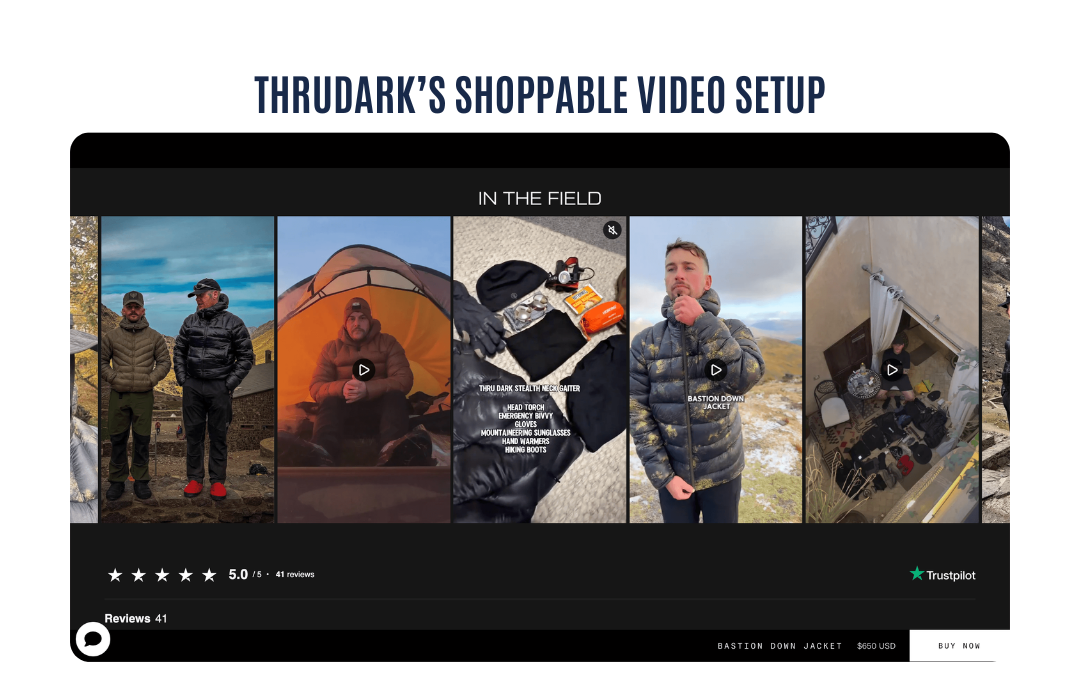
Real shoppable video examples from Shopify brands that actually convert
-> The guide breaks down how top Shopify brands are placing UGC and social video on PDPs, homepages, and collection pages — with specific placement logic.
-> The pattern that keeps showing up: video placed near the add-to-cart button drives significantly higher engagement than video lower on the page.
-> Also includes examples of brands using Moast to pull TikTok and Reels directly into shoppable carousels without manual re-uploads.
See 10 shoppable video examples from real Shopify brands →
October 12, 2026
Related content

Turn your social content into a revenue channel
Turn your TikToks and Reels into shoppable videos and boost conversions by 3.5x.
.jpg)