
Table of Contents:
Welcome to the Moast newsletter. We spend the week collecting news, trends, and other content that we think would be interesting to e-commerce founders and CMOs. Our goal is to provide value without sounding like a promo for our app. Helpful wether you use Moast or not.
Elon Musk told SpaceX's Q3 call that both boards have formed special committeesto look at merging Tesla and SpaceX, at shareholders' request. He can't sit in on the talks because he's a conflicted party, no terms are agreed, and any deal would need 50% of all outstanding Tesla shares, not just the ones that vote. His own words: assuming it's a certainty would be overstating it.
Here's what caught our attention in the world of e-commerce this week 👇
1/ DTC Headlines
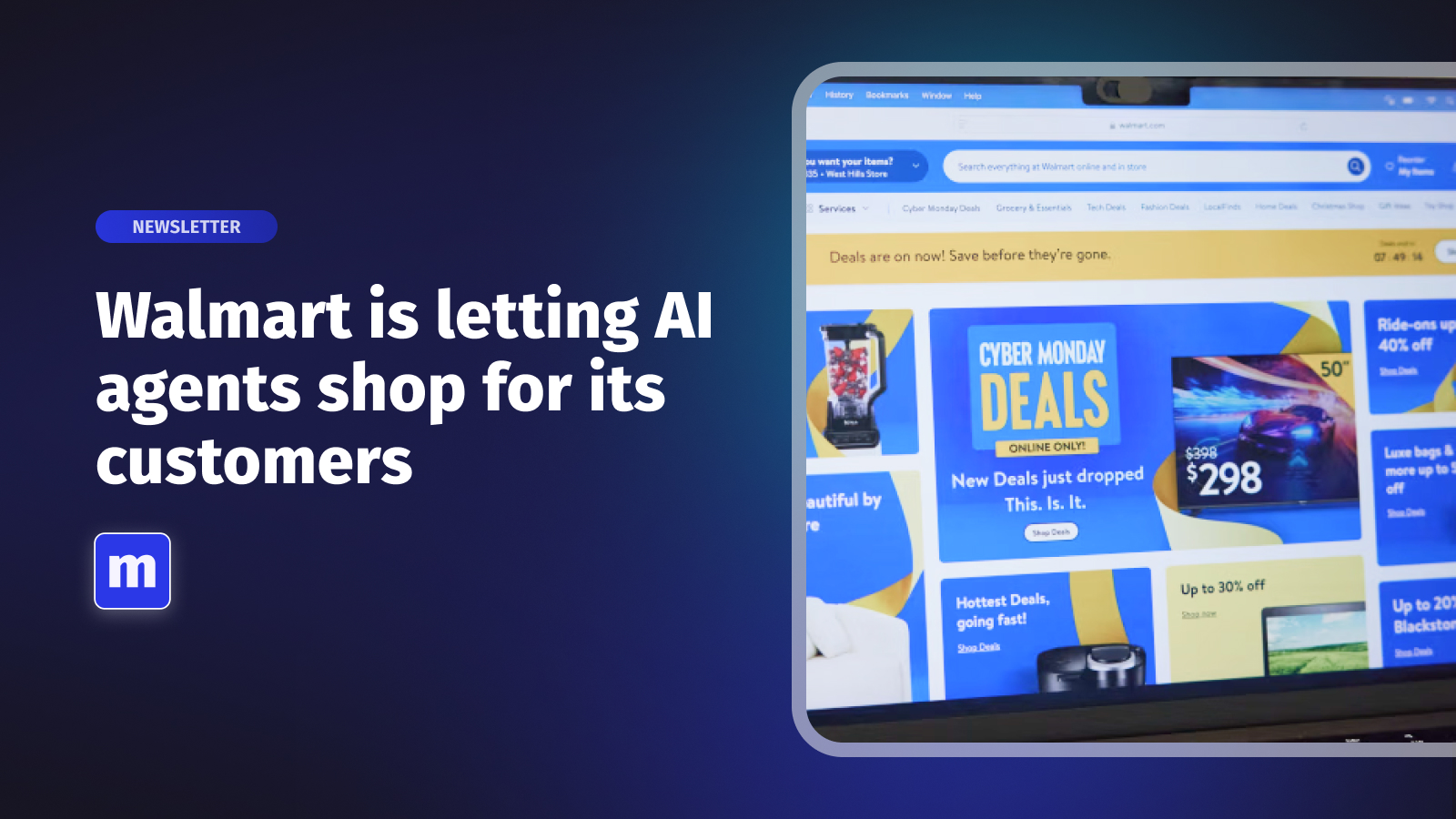
Walmart built a front door for AI shopping agents, and a rulebook
-> The Walmart Agent Gateway is an MCP server that lets approved agents search inventory and buy for a customer, instead of clicking through pages built for humans.
-> Agent Profiles land next month: each agent gets its own slot in your account, with purchases kept separate and per-transaction approval or spending limits.
-> This is the opposite of Amazon, which started blocking agents from buying. Two of the biggest retailers just picked opposite sides.
The terms Walmart wrote for agents are worth reading as a template
-> Agents can't act beyond what the shopper intended, can't touch payment information, and can't add or change payment methods.
-> Walmart's returns process applies even when an agent misbehaves, and agents that break the terms get blocked from the site.
-> The updated terms of use also bar unauthorized agents from scraping, ordering, or training models on Walmart's material without written consent.
Meta's Muse hit 10 million US downloads in 40 days
-> Sensor Tower counts 10.9 million installs since the September launch, 10.2 million of them American. Only 11 other apps have ever moved that fast, and most were games.
-> ChatGPT did 3.7 million US downloads in its own first 40 days, Grok 500,000, Claude 200,000. Muse held 30% of users at 7 days versus a 19% average for the three.
-> Caveat worth keeping: Muse accounted for 39% of Meta's ad spend in October, up from 23% in September. A lot of that growth was bought.
ChatGPT ads are now sold in 89 countries
-> OpenAI added 26 markets on October 21, including 14 in Latin America plus Nigeria, South Africa, Ukraine, Bangladesh and Pakistan.
-> More than 100,000 advertisers have run campaigns in a little over eight months. The ad business hit a $1 billion annualized run rate in August, up from $100 million in March.
-> Ads show only on Free and Go plans, and you can buy through partners or the self-serve Ads Manager.
The foldable iPhone sold out in half an hour and slipped to January
-> Preorders for the $1,999 iPhone Duo opened October 16, and within 30 minutes every color and storage size showed a January 25 ship date.
-> By launch week, US online orders carried an average 92-day wait, longer than the iPhone 18 Pro, 17 or 16 lines.
-> Apple disabled in-store pickup during preorders and told shoppers walk-in stock would be thin. A reminder that scarcity messaging only works when the scarcity is real.
Beyond Yoga is building stores around a feeling, and the feeling is yellow
-> CEO Nancy Green picks locations with a data-driven approach that prioritizes the densest e-commerce markets, which is why New York got a store at all.
-> The brand platform is "owning joy" and "celebrating progress over perfection," and it shows up physically: the stores are, by and large, yellow.
-> Wholesale does double duty as a discovery channel and as coverage for cities where a store may never open.
Germany's Otto put 19 million products inside ChatGPT
-> Otto launched a ChatGPT integration that exposes its catalog to the assistant through MCP, so shoppers can browse Otto's range in the chat itself.
-> It's also testing ChatGPT Ads, which makes Otto one of the first large European retailers running both the organic and paid sides of the same surface.
-> The product data work is the real story. Catalogs that are clean and machine-readable are the ones that get surfaced.

2/ Shopify
Three popular apps were hijacked to send shoppers to fake checkouts
-> Hulk Product Options, Selleasy and Swym Wishlist Plus each confirmed that an unauthorized party used their app to inject a script that redirected the checkout button to a phishing page harvesting card details.
-> Shopify's checkout was not breached and no theme file was touched. The code rode in through app configuration and was served from Shopify's own CDN, which is what made it hard to spot.
-> Shopify added redirect protection on October 20, and since an October 23 update storefronts block known-malicious links. Worth doing anyway: audit any app with a custom JavaScript field, and click your own checkout button.
3/ What We Found Interesting
Etsy now wants proof a human made it
-> Most listings must include at least one unedited photo of the actual item against a real background. Supplemental images can still be AI-edited for lighting or cropping.
-> AI-generated functional guides are out entirely: patterns, recipes, crochet instructions, anything a buyer relies on to make something. Fully bot-generated listings are banned.
-> AI art is still allowed if disclosed. Etsy is flagging suspected AI images during listing and has added a way for members to report misleading AI use.
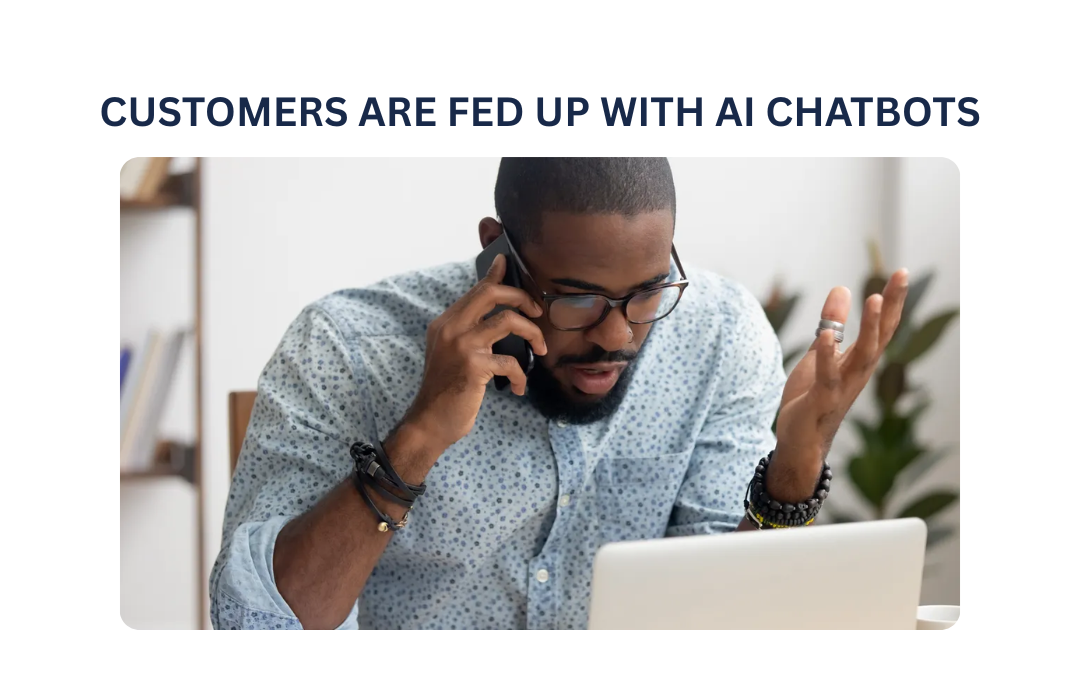
Only 46% of people rate their last AI support chat positively
-> Five9 surveyed 3,000 consumers across the US, UK and Germany. Phone, email and in-person all scored around two-thirds positive. The bot scored 46%.
-> When people bail on AI for a human, 46% say it's because the bot repeatedly misunderstood them. The advice from CX author Brad Cleveland: test with frustrated customers and fast talkers, not polite ones.
-> The counterintuitive fix: 55% trust AI to resolve their issue when a human option exists, versus 26% when there isn't one. Making escalation easy increases AI adoption.
Shoppers are buying themselves more presents than ever
-> KPMG's holiday survey puts average spend at $783, up 5% on last year.
-> Self-gifting is up 18% to $354, and 57% of shoppers say they're buying for themselves this season.
-> 37% are using AI to compare prices. If your product data is thin, you're invisible in that comparison.
4/ What We Found Helpful
AI can write your video carousel in an afternoon. Here's what it skips.
-> The player is roughly 20% of the job. The missing 80% is product tagging, revenue attribution, social import, structured data, and surviving theme updates.
-> We worked the math with every assumption stated: a basic untagged build runs $600 to $1,000 plus about $960 a year in upkeep, a full shoppable build $3,200 to $6,000 plus $1,920.
-> The expensive version is the one most stores actually run: build it basic, find out in a quarter that untagged video doesn't move revenue, then retrofit. We also name the three cases where building really is the right call.
October 27, 2026
Related content
Turn your social content into a revenue channel
Turn your TikToks and Reels into shoppable videos and boost conversions by 3.5x.