


Let's be real—video marketing isn't some trendy new thing you can afford to ignore. It's the core engine driving growth for modern businesses. Video has a direct, powerful impact on how customers shop, who they trust, and ultimately, where they spend their money. For anyone running a Shopify store, it's hands-down the most effective way to turn casual window shoppers into loyal customers.
Why You Can't Afford to Skip Video Marketing

In a world of endless scrolling, grabbing and holding someone's attention is everything. And nothing does that better than video. Think about it: people retain a staggering 95% of a message from a video, but only about 10% when they read it in text. That's the kind of "stickiness" that makes video an absolute must-have in your marketing playbook.
Honestly, not embracing a video-first mindset is a huge risk. The data shows that businesses using video grow their revenue 49% faster than those who don't. This isn't just about creating slick, high-budget commercials; it's about making a genuine connection with your audience on a human level.
From Connection to Conversion: How Video Drives Action
Video gives you a unique chance to build real trust and an emotional bond with your customers. You can use it to tell your brand's story, showcase your passion, and demonstrate the quality of your products in a way that feels authentic. In the crowded world of e-commerce, that kind of transparency is what builds lasting loyalty.
And that connection leads directly to sales. The numbers don't lie. As of 2025, a massive 89% of companies are now using video as a central part of their marketing strategy. Even better, 93% of marketers see a positive ROI from their video efforts, and 84% can point to a direct lift in sales because of their video campaigns.
The takeaway here is simple: Video is more than just a tool for engagement. It's a conversion powerhouse that guides customers from "just looking" to "just bought" faster and more effectively than anything else.
To put the power of video marketing into perspective, take a look at how it directly impacts key business objectives. The following data highlights why so many marketers are seeing such a strong return on their video investments.
Key Video Marketing ROI Metrics at a Glance
Business GoalPercentage of Marketers Reporting SuccessIncreased Sales84%Lead Generation86%Better User Understanding93%Reduced Support Calls43%Increased Website Traffic87%
These figures clearly show that video isn't just a single-purpose tool; it's a versatile asset that strengthens the entire customer journey, from initial discovery right through to post-purchase support.
The Real-World Benefits of Weaving Video into Your Strategy
Adding video to your marketing mix isn't just about following the latest trend. It’s about unlocking tangible, measurable benefits that boost your entire sales funnel.
Here’s what you can realistically expect:
- Skyrocket Your Brand Awareness: People share videos on social media far more than any other content type. One great video can explode your reach, putting your brand in front of thousands of potential new customers.
- Seriously Boost Engagement: Video is a multi-sensory experience, combining sight, sound, and motion. This naturally leads to higher engagement on your social channels, website, and even in your email marketing.
- Drive More Conversions: This is the big one for Shopify owners. Adding a video to a product page can dramatically increase your conversion rate. When a customer can see a product in action, it gives them the confidence they need to hit that "Add to Cart" button.
- Improve Your SEO: Search engines love video. Websites with video content tend to rank higher because people spend more time on those pages. That longer dwell time signals to Google that your content is valuable and relevant.
Understanding these core advantages is the first step. To dive deeper into specific tactics, check out our guide on video marketing for ecommerce. With this foundation, you'll be ready to create compelling shoppable videos that don't just entertain—they sell.
Overcoming the Hurdles to Getting Started with Video
It’s easy to see the power of video, but getting started can feel like staring up at a mountain. If you're stuck thinking about high costs, technical headaches, or just feeling completely overwhelmed by it all, you're not alone. I've heard this from countless business owners.
These are completely valid concerns, but they’re often rooted in old ideas about what video production used to be. The reality is, creating great video marketing for businesses is more accessible right now than it has ever been. Forget the Hollywood budgets and professional film crews.
The biggest thing holding you back probably isn't a lack of resources—it's your mindset. Shifting your focus from creating a perfect masterpiece to simply making progress is the key to unlocking a video strategy that actually works for your Shopify store.
Let's Bust Some Common Video Marketing Myths
Before we go any further, let's clear the air and tackle the three biggest myths that stop most people cold. Once you see these for what they are, you'll feel much more confident about hitting that record button.
- Myth #1: "It's way too expensive." This one is a classic. The idea that you need thousands of dollars in gear is completely outdated. Your smartphone can shoot incredible 4K video, and a simple, affordable microphone will give you crisp, clear audio. The real investment here isn't cash; it's your time and creativity.
- Myth #2: "I'm not a professional." Guess what? Your customers don't want a slick, overproduced commercial. That kind of content can feel stuffy and inauthentic. People on platforms like TikTok and Instagram Reels crave genuine, relatable videos. Your passion for your products is your superpower—use it!
- Myth #3: "I just don't have the time." As a business owner, your time is your most valuable asset. The trick is to work smarter, not harder. Try batching your content—set aside a few hours to film a handful of short videos at once. You’d be surprised how you can create a month's worth of content in a single afternoon.
The key is to start small. Your first video doesn't need to be some epic brand story. Just film a 30-second product demo or a quick behind-the-scenes peek at your workspace. The goal is to get the ball rolling and build momentum.
This feeling of just not knowing where to start is incredibly common. A recent study found that for 37% of marketers who haven't adopted video, the biggest barrier was simply not knowing how to begin. Other top concerns were time (26%), proving ROI (16%), and cost (11%). Even with those hurdles, 68% plan on diving into video soon, which shows just how much potential everyone sees. You can see the full breakdown of these video marketing adoption barriers on Wyzowl.
A Simple Blueprint to Get You Started
Feeling overwhelmed usually just means you don't have a clear plan. So, instead of trying to boil the ocean, let's focus on a simple, repeatable process that you can use to create your very first video this week.
Honestly, your smartphone is all you need. It’s always with you, it’s simple to use, and the camera quality is more than enough for creating fantastic videos for your site and social media.
Here's your four-step plan to get it done:
- Find Your Topic: What's the number one question customers ask about your best-selling product? That's your video topic. Simple.
- Set the Scene: Find a spot with good natural light, like near a window. A quiet space is best, so you don't have to compete with background noise.
- Record a Quick Answer: Prop your phone up, hit record, and just answer that question like you were talking to a customer face-to-face. Hold up the product, point to the features—keep it natural. Aim for 60 seconds or less.
- Edit and Post: You don't need fancy software. Use a free app like CapCut or your phone's built-in editor to trim the start and end. Add text captions—this is huge, since most people watch videos with the sound off. Then, get it out there! Post it on a product page or your most popular social channel.
This approach takes video creation from being this big, scary monster and turns it into a small, manageable task. By focusing on adding value and answering real customer questions, you're not just making a video; you're building the foundation of a truly effective marketing strategy.
Building Your Shoppable Video Content Plan

A killer video marketing strategy never just falls into place. It’s built, piece by piece, with a deliberate plan. For anyone running a Shopify store, just tossing random videos online and hoping for the best is a recipe for wasted effort. You need a roadmap. A real plan that guides viewers from that first "hello" all the way to checkout, turning your content into a well-oiled marketing funnel.
The whole thing starts with one simple question you should ask for every single video you create: "What is the one thing I want the viewer to do after watching this?" Your answer to that question will dictate the video's tone, its style, and its call-to-action. It gives every piece of content a clear, undeniable purpose.
Aligning Video Content with the Customer Journey
Let's be real—customers don't just land on your product page ready to hand over their credit card details. They go through a journey, and your videos need to meet them at every stop along the way. Think of it as an evolving conversation, one that builds trust and delivers real value over time.
The easiest way to map this out is by using the classic marketing funnel: awareness, consideration, and decision.
- Awareness Stage: The goal here is pure introduction. You're trying to get in front of new people and show them what your brand is all about. These videos shouldn't be a hard sell. At all. Instead, focus on storytelling, entertainment, or solving a common problem for your ideal customer. Think brand origin stories, behind-the-scenes glimpses of your process, or genuinely helpful tutorials related to your niche.
- Consideration Stage: Okay, now they know who you are. People in this stage have a problem and are actively hunting for a solution. Your videos should confidently position your product as the solution. This is prime territory for detailed product demos, satisfying unboxing videos, or powerful customer testimonials showing real people getting real results.
- Decision Stage: The customer is on the fence, ready to buy but maybe needing one last nudge. Videos at this point need to squash any lingering doubts and make clicking "buy" feel like the easiest, most obvious choice. This is where you can use videos to answer frequently asked questions, clearly explain your return policy, or even drop a limited-time offer to create a bit of urgency.
When you structure your content this way, you stop just making videos and start guiding potential customers through a thoughtful, supportive buying experience.
Defining Clear Goals and Audience Personas
Before you even think about hitting record, you need to be absolutely certain about two things: who you're talking to and what you want to accomplish. Vague goals like "get more sales" won't cut it. You have to get specific.
For example, a solid, measurable goal sounds more like this: "Increase add-to-carts for our new skincare line by 20% this month with a series of 60-second how-to-use videos." See the difference? That gives you a real metric to track and measure your success against.
Just as crucial is having a razor-sharp picture of your target audience. Go deeper than just basic demographics and create a detailed persona.
A well-defined persona isn't just about age and location. It's about understanding your customer's pain points, aspirations, and online habits. What social media platforms do they live on? What kind of content do they love to share?
Answering these questions is the secret to brainstorming video concepts that actually connect with people. It makes your content feel less like an ad and more like a great recommendation from a friend.
Brainstorming and Building Your Content Calendar
Alright, with your goals set and your audience in focus, it’s time for the fun part: brainstorming. Don't hold back here. Just get every idea out of your head and onto paper. What are the common questions you get from customers? What are the unique features of your products that no one else has? What's the story behind how your brand started?
Once you have a solid list of ideas, start plugging them into a content calendar. A calendar is your strategic blueprint. It keeps you consistent and makes sure all your videos are working together to tell a cohesive brand story.
It doesn't need to be fancy—a simple spreadsheet is perfect.
Publish DateVideo Title/ConceptFunnel StagePlatform(s)Goal/CTAOct 7Behind the Scenes: Our WorkshopAwarenessInstagram Reels, TikTokFollow our pageOct 14Unboxing the Fall CollectionConsiderationProduct Page, YouTubeShop the collectionOct 21How to Style Our Signature ScarfDecisionEmail, Product PageAdd to cartOct 28Customer Testimonial: Jane D.DecisionSocial Ads, HomepageBuy now
This kind of organization transforms your video marketing from a series of random shots in the dark into a focused, strategic operation. It also forces you to think about distribution, which is absolutely critical. After all, social video can generate 1200% more shares than text and images combined. And with 86% of marketers saying video is a powerful tool for lead generation, a solid plan for getting your content seen is non-negotiable. For a deeper look, check out some more compelling video marketing data on Insivia.com.
Bringing Your Shoppable Videos to Life in Shopify
With your content strategy locked in, it’s time to roll up your sleeves and get to the fun part: creating the actual videos and weaving them into your Shopify store. This is where your ideas become real, tangible assets that actively drive sales.
Don't get hung up on the word "production." You don't need a Hollywood budget. Effective video marketing for businesses in e-commerce is all about showing your product authentically and clearly.
Laying the Groundwork in Pre-Production
Before you even think about hitting record, a little bit of planning will save you a world of headaches later. Pre-production is where you map everything out to make the actual shoot as smooth as possible. Your goal is to remove all the guesswork.
Start with a simple script or at least a solid outline. You don't need to write out every single word, but you should have a clear list of the key points you want to hit. For a product demo, that could be highlighting three specific features, mentioning the materials, and closing with a direct call-to-action.
Next, sketch out a quick storyboard. No, you don't need to be an artist. A few stick figures or a bulleted list of shots is all it takes to visualize the final product. For example:
- Wide Shot: The product in a real-life setting.
- Close-up: Focus on a unique detail, like the product's texture.
- Action Shot: Show someone actually using the product.
- Final Shot: End with the product clearly displayed and a graphic pointing to where to buy it.
Trust me, this simple prep work makes filming and editing so much faster.
Practical Tips for a High-Quality Shoot
Okay, it's time to capture your footage. You can get surprisingly high-quality results with just the smartphone in your pocket, as long as you nail a few fundamentals. These small details make a huge difference.
First up: lighting is everything. Good lighting is non-negotiable. Natural light from a window is usually your best (and cheapest) option. Make sure the light source is hitting your subject head-on, not from behind.
Next, get the audio right. People will forgive a slightly grainy video, but they will bail instantly if the audio is muffled or hard to hear. A simple lavalier mic that clips to your shirt costs less than $30 and will make you sound a hundred times more professional.
My go-to tip? Always, always do a quick test recording. Shoot for 15 seconds and then play it back with headphones. This simple check can save you from realizing an hour later that a humming air conditioner ruined all your audio.
If you're wondering whether the effort is worth it, the data below makes it crystal clear why dynamic video ads consistently blow static images out of the water.
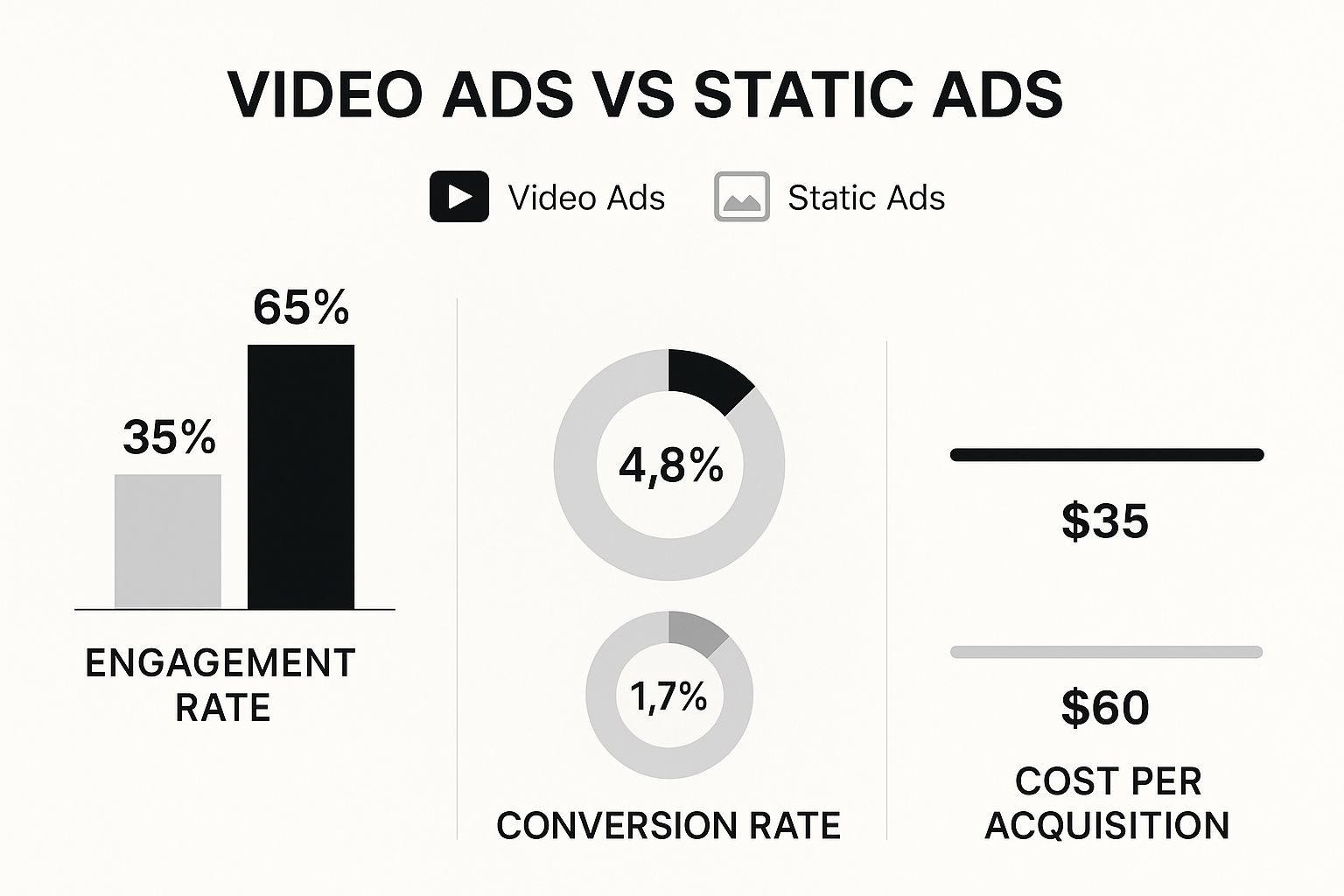
This comparison really drives home that video doesn't just grab more attention—it converts that attention into sales more efficiently and at a lower cost.
Getting Your Videos Into Your Shopify Store
Capturing great footage is only half the battle. The final, crucial step is integrating it seamlessly into your Shopify store so you can turn viewers into customers. This is what makes the magic happen.
The Shopify App Store is your best friend for this part of the process. It's packed with powerful tools built to make adding shoppable videos incredibly simple. A quick search for "shoppable video" will bring up a ton of apps that let you tag products directly in your videos, allowing customers to add an item to their cart without ever leaving the page.
Your main goal here is to close the gap between seeing and buying. When a customer loves a product in your video, the path to purchase needs to be instant. Many of these apps let you create interactive video players where product tags or hotspots pop up at just the right moment.
There are a few ways to get this done. To help you decide, here's a quick comparison of the most common approaches.
Comparing Shoppable Video Integration Methods
Integration MethodEase of UseCostKey FeaturesDedicated Shoppable Video AppsVery EasyVaries (Free to $$$/month)Clickable product tags, in-video checkout, performance analytics, social media imports.Shopify Theme SectionsEasyIncluded with ThemeBasic video embeds, good for brand storytelling. Lacks direct shoppability and analytics.Manual Embedding (YouTube/Vimeo)ModerateFreeBasic video player embedded anywhere. No interactive shopping features.
Ultimately, the right method depends on your budget and how deep you want to go with interactivity.
Dedicated apps are often the best route. They are built specifically for creating interactive, shoppable experiences and give you valuable analytics on what's working. Platforms like Moast, for example, even let you add your existing Reels and TikToks directly to your store for free, making it a no-brainer.
On the other hand, many modern Shopify themes have built-in sections for video on homepages or product pages. While they aren't "shoppable" out of the box, they're perfect for brand storytelling.
For a more detailed, step-by-step walkthrough, check out our guide on how to add shoppable videos to your Shopify store in 3 easy steps. By picking the right tools and placing your videos in strategic spots, you can create a far more compelling shopping journey that gives your engagement and conversion rates a serious boost.
Getting Your Videos in Front of the Right People
Look, creating a killer shoppable video is a massive achievement, but your job isn't done yet. A brilliant video that no one ever sees is just a file on a server. The real magic happens when you build a smart, multi-channel distribution plan to get that content in front of the right eyeballs.
This is about moving past the old "post and pray" method. You need a deliberate strategy to place your videos across different platforms, making sure each one is tweaked to shine in its environment. The whole point is to create a web of touchpoints that all lead potential customers right back to your Shopify store.
Ride the Wave of Short-Form Video
The explosion of short-form video has completely changed how brands get discovered. Platforms like Instagram Reels, TikTok, and YouTube Shorts are pure discovery engines, built from the ground up to push fresh content to new audiences. For any e-commerce brand, they're goldmines for top-of-funnel awareness.
Your strategy here needs to be different from the videos you put on your product pages. On these platforms, it’s all about grabbing attention in the first three seconds. Think quick cuts, trending audio, and content that’s either genuinely entertaining or offers a super-fast, valuable tip.
A really effective approach is to chop up your main video content into bite-sized clips. For instance:
- From a Product Demo: Got a 60-second demo? Carve it into three separate 15-second Reels, each one hammering home a single, powerful benefit of your product.
- From a Brand Story: Pull out the most compelling quote or a visually stunning moment from your brand story video to create a short clip that sparks curiosity.
- From a Testimonial: Edit a customer review down to its most impactful sentence. Then, overlay that text on dynamic shots of your product being used.
You have to play by the platform's rules. That means vertical video is non-negotiable, and so are captions—an incredible 85% of social media videos are watched with the sound off.
The goal on platforms like TikTok and Reels isn't an immediate sale. It’s to stop the scroll, earn a follow, and get your brand on someone’s radar. The conversion comes later, once they're on your Shopify site.
Weave Videos into Your Own Channels
While social media is fantastic for reach, your owned channels—your website, blog, and email list—are where you close the deal. Placing videos here provides deeper value and helps guide customers from "just looking" to "ready to buy."
Putting a detailed product video right on a Shopify product page is one of the highest-impact moves you can make. It’s like having a virtual sales assistant on call 24/7, answering questions and building the confidence needed to click "add to cart." In fact, 58% of consumers say product demos make them more confident about making a purchase. To see this in action, check out how some top brands are boosting sales with shoppable video on their Shopify stores.
But don't just stop at product pages. Embedding videos into your blog posts can skyrocket reader engagement and the time they spend on the page, which search engines love. A blog post on "Fall Skincare Tips" is way more engaging when you embed a video showing your products as part of an actual routine.
Email marketing gets a huge lift from video, too. Just putting the word "video" in your subject line can significantly increase open rates. And while you can't embed a playable video in most emails, you can use a static image with a play button icon that links to a landing page with the video. It's a classic, proven tactic for driving clicks.
Fine-Tuning for Performance and Visibility
Pushing your videos out is one thing; optimizing them is another. This is how you make sure they're working as hard for your business as possible. It boils down to a few key practices.
First, Video SEO is critical, especially for content on YouTube or your own site. Treat your video titles and descriptions just like you would a blog post. Dig into the keywords your target audience is actually searching for. A title like "How to Use Our Hydrating Face Serum for Glowing Skin" is infinitely better than "New Product Demo."
Next, your video thumbnail is your digital billboard. It's often the single reason someone decides to click play or keep scrolling. Always create custom thumbnails that are bright, clear, and feature a compelling image—a smiling face or a clean shot of the product in action works wonders. Adding a short, bold text overlay can also help it pop.
Finally, you have to dig into the analytics. Don't just glance at the view count. Go deeper and look at metrics that actually tell you something:
- Watch Time: How long are people sticking around? If you see a huge drop-off in the first few seconds, your intro isn't hooking them.
- Click-Through Rate (CTR): Are people clicking your call-to-action? If not, your offer might be unclear or just not compelling enough.
- Conversion Rate: For videos on your Shopify pages, how many viewers actually buy something? This is the ultimate measure of ROI.
By constantly tracking what's working and what's not, you can fine-tune your distribution plan, put more muscle behind your best channels, and turn your video content into a predictable, powerful sales engine.
Your Top Video Marketing Questions, Answered
Jumping into video marketing always brings up a few questions, no matter how solid your plan is. I get asked these all the time, so let's clear up some of the most common hurdles Shopify owners face.
What’s a Realistic Video Marketing Budget?
This is always the first question, and the truth is, it completely depends on what you're trying to achieve. The good news? You don't need a Hollywood budget to get started with video marketing for businesses.
For a brand new Shopify store, you can honestly start with a budget of $0. Your smartphone is your camera, and your time is the only real investment. The goal here is authenticity—think simple product demos, quick behind-the-scenes looks, or answering a customer question on video. This stuff works wonders on social media.
Once you've got your feet wet, you can make some small, high-impact investments:
- Better Sound & Stability: A simple lavalier mic ($30) and a basic tripod ($20) can make your smartphone footage look and sound ten times more professional.
- Editing Tools: There are fantastic free mobile apps out there. If you want more control, desktop software like Adobe Premiere Pro or Final Cut Pro often have monthly subscriptions from $20-$50.
- Professional Polish: Need a specific shot or a great music track? Stock services can run about $30 per month and give you access to a massive library of assets.
As your store grows, you might set aside $500-$2,000 per month. That could go towards hiring a freelance editor to save you time or putting a little ad spend behind your best-performing videos. The trick is to start small, prove what works, and then reinvest the returns.
What Kind of Video Should I Make First?
Everyone wants to know the "best" type of video, but there isn't one. The most effective video is the one that perfectly matches a specific goal for your customer at a specific point in their journey.
Don't try to make one video that does everything. A single video designed to build brand awareness, explain every feature, and close the sale will probably fail at all three. Instead, build a library of videos, each with a clear job to do.
Think about it this way:
- Top of Funnel (Awareness): Short, snappy brand stories or behind-the-scenes glimpses are perfect for grabbing attention on TikTok and Instagram Reels.
- Middle of Funnel (Consideration): This is where detailed product demos, how-to guides, and unboxing videos shine. Put these right on your Shopify product pages to answer questions and build trust.
- Bottom of Funnel (Conversion): Customer testimonials and video FAQs are your closers. They tackle last-minute doubts and give shoppers that final push of confidence they need to click "buy."
How Can I Actually Measure the ROI from My Videos?
You have to be able to measure your return on investment. Otherwise, you're just guessing. Forget vanity metrics like total views and focus on the numbers that directly impact your bottom line.
Your Key Performance Indicators (KPIs) will change depending on where the video lives. For a shoppable video on your product page, the king of all metrics is the conversion rate. It's a simple question: do people who watch the video buy more often than people who don't?
On social media, you'll want to watch engagement (likes, comments, shares), but the real prize is the click-through rate (CTR). How many people are actually coming to your store from that video?
To get really good at this, you need a solid grasp of video marketing analytics. Digging into this data shows you exactly how viewers behave and which campaigns are actually making you money. When you can draw a straight line from a video view to a sale, you've found your true ROI.
Ready to turn your best social content into a sales machine? Moast lets you add free, shoppable videos from Reels and TikTok directly to your Shopify store in just 5 minutes. Get started today at https://www.moast.io.
Related content
.jpg)


Turn your social content into a revenue channel
Turn your TikToks and Reels into shoppable videos and boost conversions by 3.5x.