


At its core, a video product demonstration is a short, focused video that shows a potential customer how your product actually works. It's about bringing your product to life, letting people see how it looks, feels, and functions in a real-world setting.
Instead of just listing features on a product page, a demo shows the value. It’s the bridge that closes the gap between a static, two-dimensional webpage and a customer feeling confident enough to click "buy." For anyone running a Shopify store, these videos are an absolute game-changer for building trust and driving sales.
The Power of Showing, Not Just Telling

Think about it this way. You could try to sell a high-end coffee machine by just listing its technical specs on a page. Or... you could show a video of that same machine brewing a flawless espresso, complete with the rich crema and the rising steam. See the difference? That's the magic of a video product demo.
These videos forge a crucial connection between what a customer sees online and how they imagine using it in their own life. In the world of ecommerce, your customers can't physically hold or test out what you're selling. Video becomes their eyes and hands, answering all those little unspoken questions before they even have a chance to pop into their heads.
Building Trust Through Transparency
A well-made demo does so much more than just run through a feature list; it builds instant trust. When a potential buyer sees the product in action, it erases doubt and hesitation. That kind of transparency is what turns a casual browser into a committed buyer. In fact, an incredible 94% of customers say that watching a product video helps them feel more confident about making a purchase.
Here’s why this approach works so well:
- It Answers Questions Before They're Asked: A good video can show the product's true size, how easy it is to use, and what it's like to unbox, heading off common customer service questions.
- It Creates a Sense of Ownership: When someone can clearly picture themselves using your product successfully, they start to form an emotional bond with it. That connection makes them far more likely to buy.
- It Highlights Your Unique Selling Points: Video gives you the perfect stage to show off exactly what makes your product better than the competition in a way that’s dynamic and easy to remember.
A great product demonstration isn't just a how-to guide; it's a compelling story. It positions the customer as the hero and your product as the tool that helps them win the day.
At the end of the day, a video demonstration transforms a flat product page into an engaging, convincing experience. It stops being about what a product can do and starts showing what it will do for the customer, creating a clear and persuasive journey from discovery to checkout.
What Makes a Great Product Demonstration

Here’s a secret: not all video product demonstrations are created equal. A decent demo will show what your product does, but a great one tells a story. It’s the critical shift from rattling off a list of features to showing how your product solves a real-world problem for a real person.
Think of it this way. One approach is like reading a dry instruction manual. The other is like watching a captivating movie where the hero overcomes a challenge. Your product is the hero. A great demo makes your customer feel connected to that story and invested in the outcome.
It gets ahead of their questions, places the product in a context they instantly recognize, and walks them toward that "aha!" moment where they see its true value. This isn't just a nice-to-have anymore. By 2025, an estimated 89% of companies worldwide will be using video as a core marketing tool, with demos and explainers right at the top of the list.
The Four Pillars of an Effective Demo
To create a demonstration that actually connects with people and gets them to act, you need to build it on four foundational pillars. Think of these as the legs of a sturdy table—each one is essential for creating a persuasive experience that turns a passive viewer into a confident buyer.
The good news? This isn't about having a Hollywood budget. It's about smart planning and authentic communication.
- A Clear, Problem-Solving Message: Your video needs a single, sharp focus. What specific problem are you solving for the person watching? Lead with that.
- Professional-Quality Production: This doesn't mean you need an expensive film crew. It just means clear audio, decent lighting, and stable footage. Make it easy and enjoyable to watch.
- An Authentic and Relatable Presenter: Whether it's you, a team member, or an influencer, the person on screen needs to come across as genuine and trustworthy.
- A Compelling Call to Action (CTA): Don't leave them hanging! The video must end with a clear, simple next step that guides them effortlessly on their journey.
A great video product demonstration doesn't sell a product; it sells a solution. It frames your item as the key to overcoming a challenge or achieving a goal, making the purchase decision feel natural and empowering.
Crafting a Narrative That Connects
Storytelling is the engine that drives a powerful demonstration. Instead of just listing what your product has, you need to show what your product does for someone. A simple story structure can make your video a thousand times more memorable.
At its core, a successful demo is all about your ability to create engaging content that captivates your audience and makes your message stick.
Here’s a simple framework that works every time:
- Introduce the Problem: Start with a relatable struggle or pain point your ideal customer faces daily. This builds an immediate connection.
- Introduce Your Product as the Solution: This is the moment of discovery. Position your product not just as a thing, but as the hero arriving to save the day.
- Demonstrate the Transformation: Show your product in action. Clearly illustrate how it solves that initial problem, focusing on the positive outcome and the feeling of relief or success.
- Paint a Picture of Their New Reality: End by showing the customer enjoying life after their problem has been solved, all thanks to your product.
This narrative arc turns a boring technical showcase into an emotional journey. By focusing on the customer's transformation, your video product demonstrations become more than just informative—they become unforgettable.
Crafting Your High-Converting Video
Alright, let's move from theory to action. Knowing you need a video is one thing, but actually creating one that gets people to click "buy" is where the real work begins. A great video product demonstration is more than just a recording; it's a strategic sales tool. We're talking about everything from the first word of the script to the final edit, all designed to do one thing: inspire your viewer to become a customer.
The secret isn't a Hollywood-level budget. It's about creating something that feels real, solves a problem for your audience, and looks great on the device they're most likely using—their phone. So, let's walk through how to build a video that pulls its weight for your brand.
Choosing the Right Format for Your Product
First things first: not all demo videos are created equal. The format you choose needs to match what you're selling. The goal is to show your product in a way that answers a potential customer's biggest questions and makes them feel confident about their purchase.
- The Unboxing Experience: Is the packaging and initial reveal a big part of your product's appeal? Think premium tech, subscription boxes, or luxury goods. An unboxing video builds that "kid on Christmas morning" anticipation and shows people exactly what they'll get.
- The How-To Guide: If your product has a bit of a learning curve or requires assembly, this is your go-to. A clear how-to guide tackles potential confusion head-on, positioning your brand as a trusted expert right from the start.
- The Comparison Video: Trying to show why your product is a better choice than a competitor's or an older version? A side-by-side comparison makes your unique selling points crystal clear. You're not just telling them you're better; you're showing them.
- The Lifestyle in Action: This is perfect for apparel, home decor, or anything that fits into a person's daily life. By placing your product in a relatable, real-world setting, you help customers picture themselves using it and loving it.
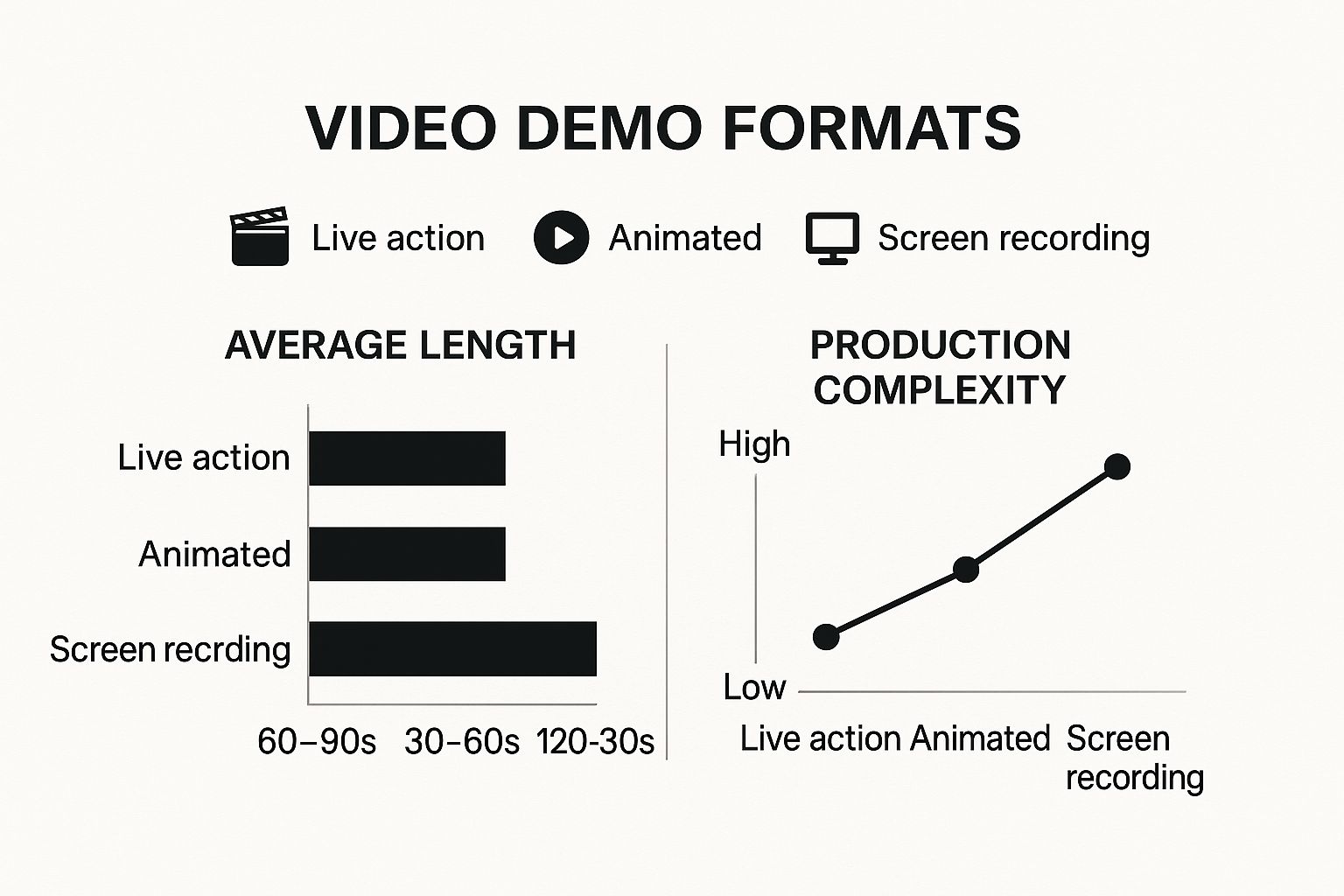
Choosing the right style is a crucial first step. It sets the stage for everything that follows, from how you shoot it to the story you tell. The table below breaks down a few popular formats to help you decide which one best aligns with your product and goals.
Choosing the Right Demonstration Format
Format TypeBest ForKey ObjectiveUnboxingElectronics, luxury goods, subscription boxesBuild anticipation and showcase the premium experience.How-To/TutorialComplex products, DIY kits, softwareReduce purchase anxiety by showing ease of use.ComparisonProducts with clear competitive advantagesHighlight unique selling points against alternatives.LifestyleApparel, accessories, home & fitness gearHelp customers envision the product in their own lives.
Ultimately, the best format is the one that tells your product’s story most effectively and gives your customer the confidence they need to make a purchase.
Mastering Production Basics Without a Big Budget
Gone are the days when you needed a professional studio to create a great-looking video. With just a few simple tools and a bit of know-how, you can produce a polished video that builds trust with your audience. If you only focus on two things, make them lighting and audio.
Good lighting makes your product look fantastic, while clear audio ensures your message comes through loud and clear. You don't need to spend a fortune; a simple ring light can provide beautiful, even light, and an inexpensive lavalier mic will make your audio sound a thousand times better than your phone's built-in microphone.
Key Takeaway: Authenticity often outweighs slick production. A clear, well-lit video shot on a smartphone that genuinely solves a customer's problem will always outperform a high-budget video that misses the mark on messaging.
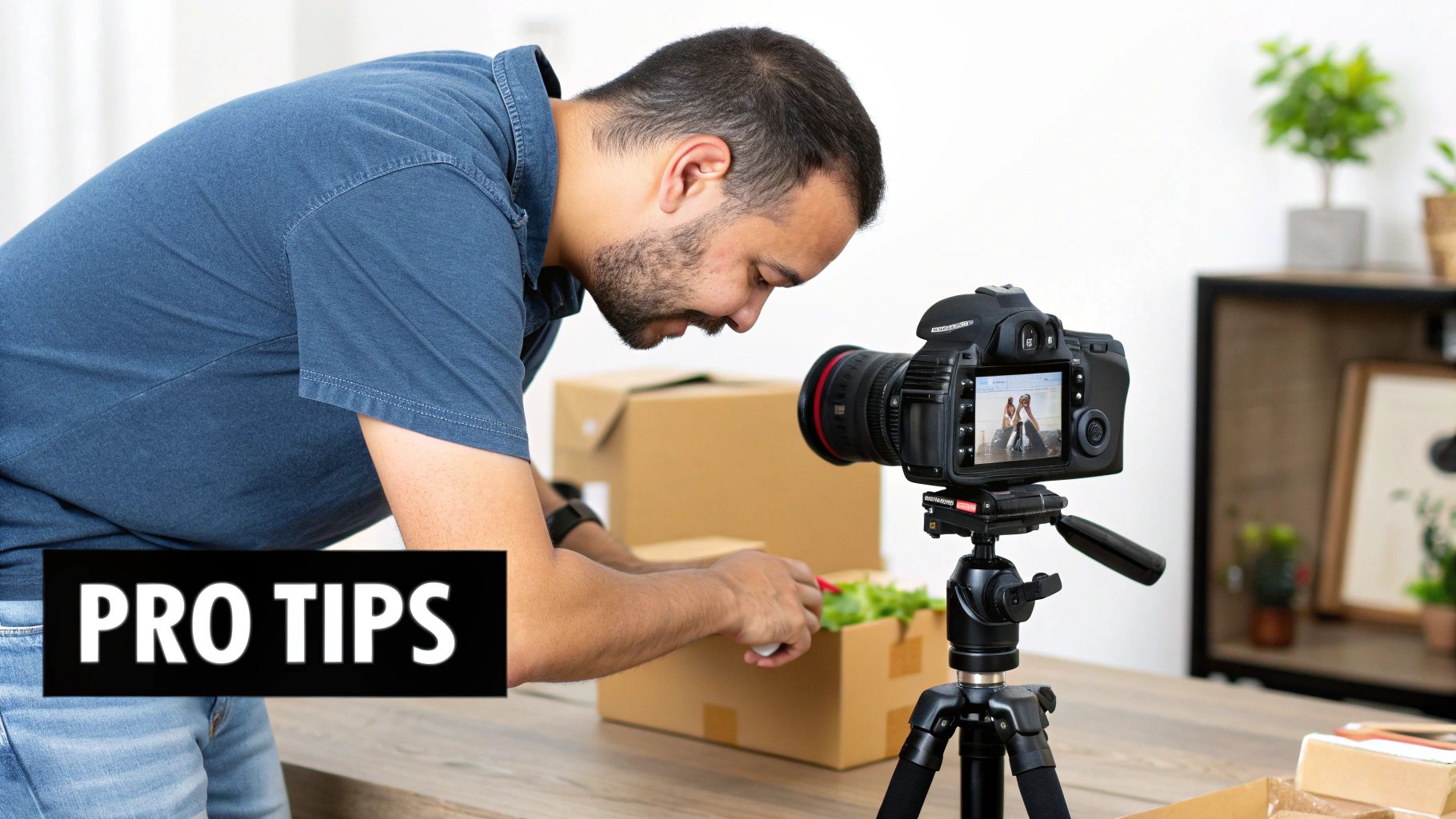
Remember, the goal is clarity, not a cinematic masterpiece. Use a tripod for a stable shot, find a clean background that doesn’t distract, and make sure your product is the undisputed star of the show. For a more detailed walkthrough, check out our guide on how to make a product demo video.
Structuring Your Video for Maximum Impact
A video that converts isn't an accident; it follows a proven narrative structure. Think of it as a roadmap that guides the viewer from being mildly curious to being ready to buy.
- The Hook (0-5 seconds): You have mere seconds to grab their attention. Start with a striking visual, ask a provocative question, or highlight a common frustration your audience feels.
- The Problem (5-15 seconds): Quickly set the scene. What's the problem your product solves? Keep it relatable so the viewer immediately thinks, "Hey, that's me!"
- The Solution (15-45 seconds): Here's the main event. Introduce your product as the hero of the story. Show it in action, focusing on the key features that directly address the problem you just mentioned.
- The Call to Action (Final 5 seconds): Don't leave them hanging! End with a clear, simple instruction. Tell them exactly what to do next—whether that's "Shop Now," "Learn More," or adding the item straight to their cart.
This simple framework just plain works because it taps into the basic human desire for problem-solving. It’s no wonder that video has become such a huge part of how we shop. Around 91.8% of internet users watch online videos every single week, and a whopping 87% of people say a brand's video has convinced them to make a purchase. The numbers don't lie—video is a powerful tool for any Shopify store.
Real-World Examples of Winning Demonstrations
It’s one thing to talk about theory, but seeing a great idea in action is where it really clicks. To get a feel for what a killer video product demonstration looks like, let's look at a few examples from brands that are getting it right. Each one takes a slightly different angle, but they all nail the fundamentals: telling a good story and putting the customer first.
These companies aren’t just listing features. They’re showing you what their products unlock for you. They get that buying something is an emotional decision, and their videos are designed to make that crucial connection.
The Tech Feature Showcase
Let’s start with a brand like Surfer SEO. Their audience knows their stuff; they’re hunting for specific tools to solve tricky problems. For them, a winning demo isn't about cinematic shots—it's about direct, undeniable proof that the product works.
Their videos often use simple screen recordings to guide you through a single feature, like their Content Editor. They'll start by pinpointing a common struggle—say, getting an article to rank on Google—and then walk you through exactly how their tool solves it, click by click. The whole thing is built around clarity, efficiency, and showing a tangible result, like watching a content score climb in real-time.
- What Works: The video is hyper-focused on one powerful benefit. No fluff.
- Key Takeaway: When you have a technical product, a clean screen recording that shows a real outcome can be incredibly convincing. It builds trust because you’re showing, not just telling.
The Beauty Brand Tutorial
Now, let's jump over to the beauty world with a brand like Glossier. Their customers aren't buying a chemical formula; they're buying a feeling—a look, a boost of confidence. So, their demos feel more like a friendly, personal tutorial.
You won't see a sterile studio. Instead, you'll see real people in everyday lighting, trying out a product like their Cloud Paint blush. The vibe is casual and conversational, almost like getting a tip from a friend you trust. The focus is squarely on the transformation—how the product effortlessly creates that dewy, healthy glow.
A great beauty demonstration sells the result, not the ingredients. By showing the product in a realistic, aspirational context, they help the viewer envision themselves achieving the same look, making the purchase feel natural and exciting.
This style is a masterclass in selling an experience instead of a spec sheet. It connects emotionally, which is a huge part of any successful ecommerce video marketing plan.
The Home Goods Problem-Solver
Finally, think about a company selling a clever kitchen gadget, like the BlendJet portable blender. Their biggest hurdle is convincing someone they need another appliance. Their video demos smash this objection by zeroing in on relatable, everyday problems.
The videos are punchy and full of energy, showing the blender in action everywhere from a tiny dorm room to a tent at a campsite. They aren't just making a smoothie; they’re solving the "I have no time for breakfast" problem or the "I need a healthy snack on the go" problem. Every quick shot is a little story about convenience.
- What Works: They drop the product into a ton of different real-world situations, tackling potential customer excuses ("I don't have the counter space" or "Cleaning must be a pain").
- Key Takeaway: Showing how versatile a product is by highlighting multiple use cases can massively boost its perceived value and make it appeal to a much broader crowd.
Looking at these different playbooks, you can see how the core principles of a great demo can be molded to fit any product. Whether you're selling software, makeup, or blenders, the mission is always the same: tell a story that makes your customer’s life better.
Making Your Videos Instantly Shoppable
What if a customer could act on that flash of inspiration and buy your product while they're still excited about your video? That's the powerful reality of shoppable video technology. It turns a standard video product demonstration from something people just watch into an interactive storefront.
This isn't just a gimmick; it's the natural next step for ecommerce video. It finally closes that gap between seeing a product in action and actually owning it. Instead of watching a demo, getting hyped, and then having to hunt for the product page, customers can just click, add to cart, and buy—all without ever leaving the video player.
Turning Viewers Into Buyers Instantly
Think about the traditional online shopping journey. It’s full of little roadblocks. A customer watches your video, gets interested, but then has to leave, find the right product page, and finally add it to their cart. Every one of those steps is a chance for them to get distracted or change their mind.
Shoppable videos get rid of all that friction.
By embedding clickable hotspots, "add to cart" buttons, and checkout links right inside the video, you capture your customer's attention at its absolute peak. It's a smooth, direct path from "I want that" to "I bought it," which can have a huge impact on your conversion rates.
Shoppable video isn't just about making things easier; it's about capturing intent the second it happens. It turns the "wow" moment into a sale in a matter of clicks, creating a far better experience for your customers and setting your brand apart.
This immediate interactivity does more than just drive sales. It gives you incredible data. You can see exactly which products people are clicking on within a video, which helps you understand what's truly grabbing their attention so you can fine-tune your marketing.
The Technology Behind the Seamless Experience
So, how does this all work? It’s actually pretty straightforward. Platforms like Moast make adding this kind of functionality to your Shopify store incredibly simple. You can take the videos you already have—like TikToks, Reels, or custom-shot demos—and just layer an interactive shopping experience on top.
The process usually looks something like this:
- Upload your video to the platform.
- Tag products from your Shopify catalog at the exact moment they appear.
- Customize the look of your call-to-action buttons and other interactive bits.
- Embed the shoppable video right onto your product pages or anywhere else on your site.
The result is a rich, engaging experience that feels completely natural for the shopper. To get a feel for how other brands are putting this to work, check out these compelling shoppable video examples.
Why This Matters for Ecommerce Growth
Adding shoppable technology to your video product demonstrations is a smart strategic move, not just a passing trend. It lines up perfectly with the massive shift toward online video. People are watching more video than ever. The global video production market, which covers all video marketing, was valued at USD 70.40 billion in 2022 and is expected to rocket to USD 746.88 billion by 2030. You can dig into the numbers in this Grand View Research report on the video production market.
That explosive growth highlights a huge change in how people shop. Customers expect online experiences to be dynamic, engaging, and effortless. By making your videos instantly shoppable, you're meeting them exactly where they are, giving them a modern shopping journey that’s both convenient and memorable. It’s a powerful way to stand out, cut down on abandoned carts, and turn your video content into a direct source of revenue.
Putting Your Video Strategy into Action
So far, we’ve covered the power of showing your product in action and the incredible potential of making those videos instantly shoppable. Now, it’s time to bring it all together and build a concrete plan. The goal isn’t just to make a few videos; it's to create strategic assets that genuinely fuel your business’s growth.
This is about making video product demonstrations a core part of how you sell online, not just a one-off project. A solid plan here pays off big time by building trust with your customers, showing them exactly what they’re getting, and making it much easier for them to go from "I'm interested" to "I'm buying." You’re essentially creating a consistent and compelling visual conversation with your audience.
Your Next Steps to Video Success
Turning great ideas into real results is all about taking focused action. Don’t get overwhelmed by the big picture. Instead, just break the process down into a few manageable steps to get the ball rolling and start seeing results quickly.
Here’s a simple roadmap to get you started:
- Plan Your First (or Next) Video: Pick one product that would really shine with a demonstration. Maybe it's a bestseller with some cool but overlooked features, or a brand-new item that people need to see to understand.
- Nail the Core Message: Before you even think about hitting record, ask yourself: what’s the number one problem this video solves for my customer? A clear, customer-focused message is the bedrock of any video that actually converts.
- Explore a Shoppable Video Tool: Start looking into how platforms like Moast can connect directly with your Shopify store. Adding that interactive layer is how you turn a viewer into a buyer right on the spot.
At the end of the day, the best video strategies are built on a simple foundation: authentically showing how your product makes a customer’s life better. Every single choice, from the script to the software, should serve that one purpose.
Making Video a Growth Engine
Ultimately, adding video to your store is about more than keeping up with trends—it's about creating a genuinely better shopping experience. Every demo you create is a chance to answer a potential customer's questions, erase their doubts, and build a real connection.
As you start to build out your library of videos, remember that consistency is your best friend. For more ideas on keeping your content engaging and effective, check out these video marketing tips to help guide you. By committing to this strategy, you’re not just moving inventory; you’re building a brand that people are excited to buy from.
Got Questions? We've Got Answers
Stepping into the world of video product demonstrations can feel like there's a lot to learn. You've got questions about everything from the gear you need to the best way to frame your message. That's totally normal.
Getting the small details right is what separates a video that just sits there from one that actually makes you money. Let's tackle some of the most common questions Shopify merchants ask when they start using video.
What's the "Right" Length for a Product Demo Video?
Honestly, it depends entirely on where someone is watching it. The perfect video length isn't a one-size-fits-all number.
If someone's scrolling through their social media feed on Instagram or TikTok, you have seconds to make an impact. For these fast-paced platforms, keep it short and punchy—think 30 to 60 seconds. The goal here is to stop the scroll and plant a seed of interest.
But when a shopper is on your actual product page, they're in a completely different mindset. They're already interested and actively looking for reasons to buy. This is where you can go deeper with a 2 to 5-minute video that explores features, shows different use cases, and really tells the full story of your product.
No matter what, your first 10 seconds are everything. Always open with your most compelling shot or the single biggest benefit. You have to give them a reason to stick around.
Do I Really Need Fancy, Expensive Gear to Make a Good Video?
Not at all. The truth is, the smartphone in your pocket is probably all the camera you need to create fantastic-looking video product demonstrations. The secret isn't a thousand-dollar camera; it’s spending a little bit on two things that make a huge difference: lighting and audio.
Think about it: bad lighting makes a great product look cheap, and fuzzy audio makes your message impossible to hear. The good news? The fix is both easy and affordable.
- Great Lighting: A simple ring light can give you that clean, professional look. Even better? Find a spot near a window and use natural light—it's free!
- Clear Audio: You can get a cheap lavalier microphone that clips onto your shirt. This small investment instantly makes you sound clearer and cuts out distracting background noise.
Remember, people connect with authenticity. A genuine, helpful video shot on a phone will always outperform a slick, overproduced video that feels cold and corporate.
What's the Single Most Important Part of a Demo Video?
If you only remember one thing, make it this: your video must focus on solving a customer's problem. Too many brands fall into the trap of just listing features. That’s like reading the instruction manual out loud—boring and unconvincing.
Instead of saying, "Our vacuum has 200 air watts of suction power," show it cleaning up a huge mess of spilled coffee grounds from a white rug in one pass. See the difference?
You're no longer just describing a spec; you're demonstrating a real-life benefit. The most powerful videos tell a simple story of transformation, taking the customer from a point of frustration to a feeling of relief. You're not just selling a product; you're selling a solution that makes their life better.
How Exactly Do Shoppable Videos Drive More Sales?
Shoppable videos are so effective because they dramatically shorten the path from "I want that" to "I bought that." They close the gap and remove friction from the buying process.
In a typical setup, a customer watches your video on social media or your blog. They get excited. Then what? They have to stop the video, hunt for the product on your site, find the right page, and then add it to their cart. Every single one of those steps is a chance for them to get distracted and walk away.
Shoppable videos change the game entirely.
By putting an "add to cart" button directly inside the video player, you let customers buy the second they feel that spark of inspiration. They can act on that impulse immediately, creating a seamless line from discovery to purchase. This is how you turn passive viewers into paying customers and leave cart abandonment in the dust.
Ready to turn your product videos into a nonstop sales engine? With Moast, you can add beautiful, shoppable videos to your Shopify store in just 5 minutes, completely free. Put your best content to work and let your customers shop right from the video. Get started with Moast for free.
Related content
.jpg)


Turn your social content into a revenue channel
Turn your TikToks and Reels into shoppable videos and boost conversions by 3.5x.